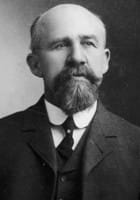
Charles G. Moogk
Inducted In
2005
Charles Moogk was born in Preston (Cambridge), leaving school at the age of thirteen to work as a chore boy and in various dry goods and grocery stores. Moogk trained as a carpenter in Detroit, Michigan, then returned to Preston and worked on several construction projects.
Moogk immigrated to the United States in 1873, returning to Canada the following year and worked for a contractor building the new Waterloo Village Hall, Fire Hall and Market Building. From the early 1880s until 1911, he owned and operated his own construction office in Waterloo. During this time period, Moogk was involved in the construction of civic and commercial buildings, and residential homes.
In 1899, Waterloo Town Council appointed Moogk as the Town’s first full-time Engineer. In this role, he oversaw the drilling of municipal water wells and the installation of fire hydrants and fire call boxes. Moogk supervised the conversion of the Town’s steam-powered electricity generator to hydro power generated at Niagara Falls. He also conceived of and implemented plans for municipally-funded garbage collection, street numbering of buildings, and the paving of Waterloo’s main streets.
Significant surviving structures in Waterloo in which Moogk played a role include: Carnegie Library (1905), Waterloo Post Office (1893 and 1912), Zimmerman Hotel (1890), Mutual Life Building (1890), St. Paul’s Presbyterian Church (1888), St. Louis Roman Catholic Church (1890), All Saints Anglican Church (1897), Erb Street Mennonite Church (1902), St. Louis Separate School (1905) and Alexandra School (1910).
Moogk served as a Waterloo Town Councillor from 1886 to 1888. He was President of the Waterloo Music Society, a member of the Waterloo Park Board, and he served as secretary for forty-seven years of Germania Lodge #184 of the Independent Order of Oddfellows.
(Records and architectural drawings of Moogk’s work have not survived. It is not always apparent in the building projects in which he was involved whether he drew the architectural plans, supervised construction, or supervised the projects in his role as Town Engineer.)